Friday, January 9, 2009

Diamonds are a girl's best friend.


There might not have been a better screen tandem, at least for males, than Marilyn Monroe and Jane Russell in Gentlemen Prefer Blondes (1953). The two were well known for their sex appeal. Russell was brunette. Marilyn was blonde. Their effects on men were the same though.

Groucho Marx remarked that the movie Double Dynamite (1951), in which he starred with Russell and Frank Sinatra, was so named by Howard Hughes in honor of Jane Russell’s breasts. Considering there is no dynamite in the movie and the metaphorical meaning of the title could be lost on most audiences, Groucho might have a point.

The two got along brilliantly on and off-screen. Marilyn had a tremendous inability to get to places on time. Jane would stop by her house every day and drive her to the set so she would be on time. Marilyn was involved in Freud at this time and she tried to get Jane to read some of his work. She didn’t quite take to it. She was more religious and tried to help Marilyn find a religion. Marilyn didn’t quite take to this either.

Gentlemen Prefer Blondes is a musical. Musicals aren’t typically known for their plot. This one revolves around Marilyn and Jane who are best friends. Marilyn is Lorelei Lee, a blonde who covets diamonds and money. Jane is Dorothy, a brunette who is more concerned with true love rather than material love. Lorelei and millionaire geek, Gus are planning an engagement. Gus’ father is not too happy with Lorelei’s lack of brain power. When the two showgirls head out for a European tour, Gus’ father sends out a detective to spy on Lorelei. Comedy and music fill the voyage across the pond. Charles Coburn is wonderful as Sir Frances Beekman “Beekie” to Lorelei. He is a rich man who is enamored with Lorelei’s beauty. She in return, is enamored with the diamonds his wife possesses.

But like in all musicals, it is the music that matters. Three songs from the movie still survive today. “I’m Just a Little Girl from Little Rock,” “Bye Bye Baby,” and most famously, “Diamonds are a Girl’s Best Friend.” The later is most associated with Marilyn, but the version we all know was sung by Jane Russell in the movie. Still the Technicolor rendition of Marilyn’s version is most frequently replayed when Marilyn Monroe tributes occur on T.V.

The three songs were all taken from the Broadway musical of a book written by Anita Loos. Carol Channing performed the role of Lorelei on the stage. Some believe that Fox missed out when they didn’t get one of the greatest musical performances ever on film by not casting Carol Channing. But Anita Loos stated that Marilyn was the perfect Lorelei.

The only original song included for the movie was “When Love Goes Wrong.” The two actresses did a brilliant job on the number. Audiences came to like it as one of the best in the movie.

With the success of Gentlemen Prefer Blondes came the ultimate success for any actor. Both Jane Russell and Marilyn Monroe got to put their foot and hand prints in the cement in front of Grauman’s Chinese Theatre. Legend has it that Marilyn said instead of hand and foot prints, the two should have placed their breasts in the wet cement. Anyways, Marilyn put a diamond over the “i” in her name. It was stolen a few days latter. Today a rhinestone is in its place.

Thursday, January 8, 2009

"Why should the Falls drag me down here at 5 o'clock in the morning? To show me how big they are and how small I am?"


The big break is something every actor is waiting for. Today it is amazing to think of some of the movies yesterdays Hollywood stars appeared in that were considered their “big break.” For Marilyn Monroe that movie is Niagara (1953). This is surprising because it is not a typical Monroe vehicle. It is not a comedy and her character does little to arouse sympathy in the audience.

There are two things about this movie that make it different from other Monroe movies and would be duplicated throughout the rest of her career. These two things are what make Niagara the break-out movie for Monroe. First, this is the first time she appeared in Technicolor. After seeing the rushes Marilyn wanted a clause in her contract stating that she could only appear in color movies. After seeing the box office returns, Fox gladly accepted. She was made for color movies. The difference between her in color and her in black-in-white is startling.

Secondly, the movie brought Marilyn’s famous walk into movie theaters across the country. Although she never got the big commotion made over her walking style, male audience members had no problem trying to dissect it. On the first day of shooting, director Henry Hathaway stuck the camera right behind her and had it follow her as she walked around a tourist overlook at the Falls.

These two firsts in Marilyn Monroe films helped make her a superstar. She had already been a hit with audiences, but this movie made the studio heads at Fox notice that she was also bankable in a starring role. Today the movie is still loved by Marilyn Monroe fans. I am not one of these though. I struggle with reasons why. Perhaps it is because this is a movie based around murder and the movie is just not tight enough to hold audiences in constant suspense, like an Alfred Hitchcock movie.

Speaking of suspense and Alfred Hitchcock, Joseph Cotton stars opposite Marilyn here. The veteran actor was probably taking a step down when he appeared in this picture. He had been with Orson Welles in Citizen Kane (1941) and The Third Man (1949). He had also worked with Alfred Hitchcock in Shadow of a Doubt (1943) and Under Capricorn (1949).

Here, Cotton plays George Loomis, a retired solider who has just gotten out of a mental hospital. His wife, Rose, played by Marilyn, believed that it would be good for him to take a trip to Niagara Falls in order to rekindle their marriage. This doesn’t happen and Rose becomes bored with George. She decides to take up a new lover and secretly meets with him while George struggles to find some path in life.

She plots with her lover to have George killed. The plot nearly works as the idea is to have George pushed over the Falls. Someone is pushed off, but it isn’t George. The lover dies and George realizes that Rose wanted him dead. He sets off on a path to kill her.

George and Rose’s relationship is contrasted by the Cutlers, Ray and Polly, a couple who is on their second honeymoon/business trip as the headquarters of Ray’s office is located just across the Falls in Canada.

The Cutlers are probably a big reason why I don’t like the movie. They are static characters who have not aged well. It is hard to watch when they are on-screen. It is also hard to watch Joseph Cotton. He is a much better actor than this. Not enough time is given to his character, which is why there seems to be a lack of explanation for the things he does in the beginning. Marilyn Monroe, however, looks great and steals the show, like she did in every movie she was in.

It wasn’t the most memorable movie, but it was the beginning of superstardom for Marilyn Monroe. The movie is special for its place in her career. It also features some firsts that would later be used to great success in some of her future movies. Although she does die in this movie -- something that would not be repeated in another one of her pictures.

Monday, January 5, 2009

"What's a confidence man without confidence?"


Short stories typically make good movies. At least that is the belief of many directors as, unlike a novel, short stories are meant to be read in one sitting much like a movie. The problem with short stories though, is that they tend to be too short for movies that run 90 minutes, unless the screenwriter decides to add something more to the story. In 1952 Fox decided to make a movie that is a combination of short stories. The movie, O. Henry’s Full House is much like watching a series of anthology television episodes. The only real difference is that there is someone, John Steinbeck, who introduces each of the O. Henry short stories before we see it onscreen.

Fox brought out all the star power it had for this collection of shorts from the master of the unexpected ending. John Steinbeck introduces each story, as mentioned above, by pulling out a book from a bookcase and reading the first few sentences in the O. Henry story before we fade in to the visual story.

The first of the five stories shown is called “The Cop and the Anthem.” It stars Charles Laughton as a bum who wants to get arrested so he can spend the winter months in a warm jail cell. He tries to do everything he can to get arrested. He breaks a window, he attempts to assault a police officer but ends up tripping himself, he even orders a huge breakfast and doesn’t pay for it. All these attempts end up not working. Marilyn Monroe makes a brief appearance as a streetwalker, who Laughton attempts to pick-up. This attempt also fails. Finally Laughton stumbles into a church where he is so moved that he decides he does not want to be arrested, but rather he wants to become a working member of society again. He exclaims that he has seen the light. As he does this, a cop walks by and arrests him for loitering.

Henry Hathaway directed the next installment, called “The Clarion Call.” Here a police officer discovers the suspect to a murder, but since the two were friends, and the murderer has some knowledge about the police officer’s past that isn’t too good, he is unable to make the arrest.

Finally the cop asks his former friend if he could pay him to turn himself in. The murderer says sure, knowing that the cop can never afford the price on his petty salary. The murderer plans on getting his former friend back into the other side of the law. But this plan fails when the friend brings the money to the murderer, who is arrested. The murderer wonders why this happened and the cop explains that a local newspaper was offering a reward for the exact amount agreed upon.

“The Last Leaf” is one of my favorite O. Henry stories. It is brought to life by director Jean Negulesco, Anne Baxter and Jean Peters. The story revolves around two sisters. One who it appears is on her death bed, the other, Anne Baxter, who will not allow her to die. Baxter enlists an upstairs neighbor, who is a wannabe painter, into her fight to make her sister believe that she isn’t dieing. The sister believes that when all the leaves outside of her window have fallen, she will die. Baxter and the doctors know this is not going to happen, but her sister still believes this. It takes some work, but after a rough and brutal night, the sister lives. Amazed at what has happened, the sister asks to see out the window. The window shade is opened and there is one leaf remaining on the branch. Or so it seems. The old painter happened to spend all night outside painting the leaf perfectly so that it would match. The joy of the sisters is interrupted with the news that the painter had caught pneumonia and died.

“The Ransom of Red Chief” is directed by Howard Hawks and written by Nunnally Johnson and Ben Hecht, so it is going to be funny. This humorous tale is about two city thugs who believe it is easier to commit crimes in small towns. They ask around a small town in Arkansas about who the richest man in town is. When they find out who it is, they decide to take his young son and hold him for ransom. This is a great idea until they meet the son, who is too much for the city thugs to handle. The parents are overjoyed that their son has been taken off their hands. They refuse to pay the ransom and demand that they are paid in order to take their son back. The city thugs agree to this, but the son, “Red Chief” as he likes to be called, has taken a liking to them and refuses to go. The thugs are finally able to leave the boy, but they head out of town a lot poorer than they were.

The final story is probably O. Henry’s most famous, “The Gift of the Magi.” It is Christmas time and a struggling young couple has to decide what to get the other for Christmas. The wife has great flowing hair, so the husband decides to get her some combs that she has always wanted. The husband has a great gold watch, so the wife decides to get him a gold chain to match the watch. In typical O. Henry style, the wife sells her hair to buy the chain, while the husband sells the watch to buy the combs. It is the spirit of Christmas at its best.

O. Henry the man was an interesting person. O. Henry the short story writer was one of the best America ever produced. This movie is a fitting tribute to such a great storyteller.

Thursday, December 25, 2008

"Mr. Oxley's been complaining about my punctuation, so I'm careful to get here before nine."


The screwball comedy genre was at its peak in the 1930s. The master of the screwball comedy was Cary Grant. His proper English accent and refined manners went perfectly with scripts that were absurd. By the time 1952 rolled around though, Grant was known equally for his comedic abilities and his dramatic acting skills. Monkey Business (1952), not to be confused with the Marx Brothers movie of the same name released in 1931, is a return for Grant to the genre that made him famous.

Howard Hawks was brought on to direct the picture. Like Grant, Hawks was capable of directing both great comedies and outstanding dramas. Hawks had the distinction at this time as being one of the few Hollywood directors who was not typecast, such as John Ford and westerns. Hawks made westerns, film noir, screwball comedies and just about anything else.

Playing opposite Cary Grant was the great musical actor, Ginger Rogers. The two are great as Barnaby and Edwina Fulton. Our story revolves around the couple. Barnaby is a scientist who is working on a drug that will make people young. The idea of becoming young through a drug or potion seems to be a popular one even today.

Barnaby believes he has found the correct formula. His absent mindedness prevents him from remembering just what it was though. Luckily for him chance, and a screenwriter, helped him out as a monkey in the lab decided to mix some chemicals together and then pour them into the water cooler. This concoction is just what Barnaby was looking for. He takes a sip from the tainted cooler and immediately acts young again.

He no longer needs his glasses. He runs out and buys a sports car. He takes his bosses secretary, Lois Laurel, played by Marilyn Monroe, on a joy ride. The two go swimming and roller skating together and Barnaby even gets a young man’s haircut. All this thrills Barnaby and Lois. It frightens his boss, Mr. Oxley. It disgusts his wife Edwina, who becomes very jealous of the relationship Barnaby and Lois have.

Of course since the formula was not discovered by Barnaby, but actually present in the water cooler, anyone has access to the formula. Edwina is the next to become young after Barnaby regains his age and poor eyesight. She becomes a young troublemaker who wants to relive her honeymoon night with Barnaby. Of course the couple spent their honeymoon down in La Jolla. Barnaby does not want to make the long drive down, but Edwina insists and the couple speeds down the coast.

When they arrive at the hotel, Edwina finds out there is a ballroom where swing dancing is going on. Of course she wants to do this and the aged Barnaby can not keep up with the teenage acting Edwina. This allows the audience to see Ginger Rogers dance though, which is something everyone expects when they see a movie with Ginger Rogers in it.

After some troubles that night, in which Edwina calls her mother and old boyfriend and wants to divorce Barnaby, the effects of the potion wear off. Edwina and Barnaby make up, but the damage Edwina did to their relationship that night still has to be resolved as her mother and former boyfriend along with the press are at their house when they arrive around midday.

From here the formula for the potion is torn up by Barnaby, as he feels the public is not ready for such a drug. Of course we know the reason why everyone is behaving so oddly is because of the water cooler. This is lost on Barnaby and Edwina. They both turn younger and it is up to Mr. Oxley to try and find out what the formula was from the young Barnaby so that he can make his own transformation as well as a ton of money by marketing the product.

The movie ends, as most screwball comedies do, with a huge climatic scene filled with zaniness. Then everyone lives happily ever after once the problem, in this case the tainted water, is discovered and rectified. The water is poured out and the cooler cleaned so nothing like this would happen again.

Although the stars of the movie were Cary Grant and Ginger Rogers, Fox made sure Marilyn Monroe appeared in as many advertisements as possible. At this point she was a hot commodity with fans and a huge moneymaker, no matter how much studio executives doubted she had talent. It would still be a couple more pictures before the studio would decide to let her star in a color picture, but the rise to stardom for her was certainly moving faster than it was even a year prior to this point.

Tuesday, December 23, 2008

The same old story


Couples who think they are married, but really aren’t, is a storyline popular among Hollywood farces. Classic Hollywood has dealt with this subject many times. Even a director like Alfred Hitchcock made a movie using this storyline with Mr. and Mrs. Smith (1941), not to be confused with the Angelina Jolie and Brad Pitt movie.

Fox decided to make a movie along similar lines about a decade later with the aptly named We’re Not Married (1952). The twist here is that there is more than one couple that isn’t married. So instead of focusing on the decision one couple will make, to remain married or go their separate ways, we get to see five such couples. A short movie like this does not allow time for deep character development though.

Bumbling justice of the piece Melvin Bush ends up learning that he did not have the authority to marry five couples when he believed he was justice of the piece. He in fact had not been approved and only discovers this mistake two years later. So he has to send out letters to the five couples in order to tell them they aren’t married.

Ginger Rogers appears as Mrs. Steve Gladwyn. The Gladwyns were the first couple the justice married and they have ended up despising each other, despite appearing in the opening scenes as a happy couple. They eventually decide to remain married in order to keep their lucrative radio show, in which they give advice to other couples, on the air.

Marilyn Monroe is a beauty contest winner. She earns the title of Mrs. Mississippi. When she learns that she isn’t married, she faces the probability that her crown will be lost. This doesn’t deter her though as she decides to compete in the Miss Mississippi pageant, which is much more prestigious. Her “husband” and baby look on in delight, as do hundreds of other males, when she wins the Miss Mississippi crown.

The best comedy of the movie occurs when the “husband” Jeff Norris overhears someone admiring his “wife’s” looks. He asks the man if he likes what he sees. The man replies yes. Then Mr. Norris explains that the woman the man so likes is his wife. The admirer is embarrassed, but Mr. Norris says it is alright. He has to get used to it. This is something Joe DiMaggio never got used to when he married Marilyn Monroe.

The Melrose couple is composed of Louis Calhern and Zsa Zsa Gabor. Calhern is a wealthy businessman who has Gabor as his trophy wife. Gabor decides that she will divorce Calhern to get half his estate. Calhern hates this idea, but when the letter comes stating that the two aren’t married, he goes along with the plot. He gets the last laugh and Gabor ends up fainting when she finds out they were never legally married.

The movie spends most of the time on Monroe and Rogers, as they were the two Fox players in the movie. The other two couples are not developed well enough and don’t contain the name power like Louis Calhern and Zsa Zsa Gabor do.

Nunnally Johnson, who was good friends with Groucho Marx, wrote and produced the movie. Unfortunately, there are no Groucho Marx moments here. The pacing is stilted and the characters are not completely developed. This wouldn’t be the last time Johnson and Monroe would work together. They teamed up again on How to Marry a Millionaire (1953). Johnson wrote and produced the movie, but could not stand working with the new star Monroe. As for this teaming up, the movie has some bright spots, but not enough to warrant more than one viewing.

Thursday, December 18, 2008

"Home is where you come when you run out of places."


For the third time in her career, Marilyn Monroe would play a bit part in a movie from a major director. Clash By Night (1952), was less successful than The Asphalt Jungle (1950) and All About Eve (1950). It was not because it lacked star power though. The failings of this movie come in its story.

Clash By Night began as a Broadway play written by Clifford Odets and starring Tallulah Bankhead. The play was a flop on Broadway, but that didn’t stop Hollywood producers from grabbing it. In the play there was a murder and the action was set on Stanton Island. In the movie there is no murder and the location has changed to California.

The movie and play both revolve around a love triangle. There is Mae Doyle, who has gone off to find her fortune and fame only to return back to her brother’s house with nothing. Her brother Joe works on a fishing boat owned by Jerry D’Amato. Jerry has the hots for Mae and because feels like she can’t do any better, she decides to marry Jerry. Things go alright for the married couple. Jerry feels like he has everything in the world. Mae is content with her life, but not happy.

Happiness comes into Mae’s life in the form of Jerry’s best friend Earl. The two begin sneaking behind Jerry’s back. In the play Earl was murdered when Jerry found out about the relationship. In the movie Mae is forgiven for her wrongdoing by Jerry and the two live reasonably happily ever after.

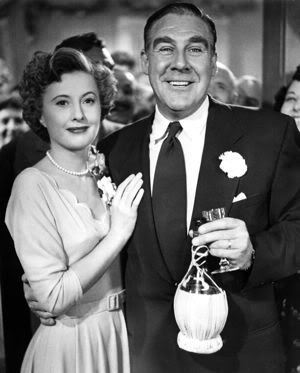
As mentioned above, the star power present in Clash By Night is the biggest reason to watch the movie. Barbara Stanwyck plays the role of Mae. She is her usual tough and scrappy self. It was not a stretch for her to play the part.

Marilyn Monroe appears briefly as Joe’s girlfriend, a cannery worker who contrasts the personality of Mae perfectly. Marilyn’s character has similar aspirations as the young Mae did, but instead of leaving town for the big city, she remains to marry Joe.

Of course when publicity cameras came around to take shots of the cast, there was a lot of attention paid to Marilyn. This did not sit well with Paul Douglas who plays Jerry. Not only is he getting screwed over in the movie, but in the publicity as well. He was not happy that some unknown bit player who appeared on screen for a few minutes was getting all the attention from the cameras.

Rounding out the love triangle is Robert Ryan who plays Earl. He became Marilyn’s only real ally on the set. Paul Douglas did not like her, even before the publicity incident. Barbara Stanwyck was basically indifferent to the young actress. And director Fritz Lang could not stand her.

Lang was a tremendously successful filmmaker in Germany. His movies Metropolis (1927) and M (1931) were critically acclaimed. The odd thing is that Lang’s films were praised by the Nazis. Hitler was a huge fan of Metropolis. His wife was even a big supporter of the party. But in the face of fascism, Lang decided to make the move to America. He arrived in Hollywood and turned out some decent movies, such as Fury (1936) and The Big Heat (1953).

He was an extremely controlling person. He was notorious for being hard on actors. This did not sit well with the shy Marilyn Monroe. She was scared of him. Her acting coach Natasha Lytess would give Marilyn pointers after every take. Lang did not like this as he felt his authority was being undermined. It was not a pleasant experience for Marilyn once Lang got Lytess thrown off the set.

Today Lang is not as well known as he probably should be. He was a pioneer in the silent cinema and his first sound picture dealt with the murder of children. But like Sergei Eisenstein something happened when he left his home country that prevented him from continuing to be a great filmmaker. That being said, he still deserves a place with the elite directors of cinema.

Wednesday, December 17, 2008

Back from overseas.


At this point in her career, Marilyn Monroe was typecast as either a dumb-blonde secretary or girlfriend or her own woman in a B-comedy. The first example of the later is Love Nest (1951).

Love Nest is not that bad of a movie for being a B-comedy. It breaks no new ground, but it is good entertainment. The story revolves around the Scott couple, Jim and Connie. Connie, played by June Haver, has bought an apartment building in New York. This is a huge surprise to Jim, played by William Lundigan, when he arrives home from the army. He expected a nice quiet apartment. Instead he has become landlord for an apartment building that needs a lot of fixing up.

The comedy comes as the couple tries to improve their love nest and as Jim is continually interrupted from his writing by problems that occur in the apartment building.

As with any apartment building, single tenants become interested in each other. This is the case for Eadie Gaynor, played by Leatrice Joy. Eadie falls for Charley Patterson, played by Frank Fay. Charley is an older gentleman, while Eadie is Connie’s best friend. It appears that the love next is expanding to include two happy couples. Here are where complications are thrown in.

First with Connie and Jim. Jim tells Connie that his friend, Bobby, from the army has written him and wants to stay in their apartment building. Connie says alright, as she wouldn’t want to look like she discriminates against veterans. Connie is shocked when “Bobby” shows up and is actually Marilyn Monroe, who plays Roberta Stevens, known to friends as Bobbie.

Connie doesn’t like what her husband has done to her and is jealous of Roberta. But she can not worry too much about this problem as it is discovered that Charley is not a rich old man, but rather a con artist. Connie fears for her best friend Eadie, as the two are planning on getting married. Jim can’t believe that the nice old man is really a criminal.

Charley admits that he is a criminal, although he pledged that he would not revert to his old ways once he married Eadie, as he believes he has finally found true love. Eadie feel bad for Charley, as do Jim and Connie, but things work out for the couple. Connie has the apartment building running well and Jim gets an opportunity to be a writer. Charley offers to tell Jim his life story for a biography. The book ends up being a best seller and the couple ends up happily ever after.

The acting is hit or miss here. That probably has something to do with the characters though. Charley and Roberta are the most interesting characters and Frank Fay and Marilyn Monroe give the best performances. Leatrice Joy is also good, but June Haver and William Lundigan are nothing special. Their characters might be the focus of the story, but the story is about two common people trying to make things work. So the actors don’t have to be of the Shakespearian quality to make this work.